+852 5394 6901
 Take China Group Tours in 2026/2027 to enjoy 30% discount compared to private tour. Same Experience & Lowest Price!

Suzhou Top Attractions on Map

The Suzhou Attractions Map is quite easy to follow. To help you plan your visit, I’ve pinpointed the best attractions and places to visit in Suzhou on the map and organized them in the simple table below.
| Area | Top Attractions & Things to Do |
|---|---|
| Old Town Core (Gusu District) | Humble Administrator's Garden, Suzhou Museum, Lion Grove Garden, Lingering Garden, Master of the Nets Garden, Kunqu Opera Museum |
| Northwest Area | Tiger Hill, Shantang Street |
| Southwest Corner | Panmen Scenic Area, Suzhou No. 1 Silk Factory |
| Grand Canal | Beijing-Hangzhou Grand Canal Cruise |
| Water Towns (Suburbs) | Zhouzhuang, Tongli |
Explore Suzhou with our Suzhou Maps >>
1. Lose Yourself in the UNESCO Classical Gardens of Suzhou


Suzhou, known as the "City of Gardens" in China, boasts a remarkable collection of classical Chinese gardens that have a history spanning over 2,500 years.
These gardens stand as a testament to the pinnacle of Chinese classical garden design and construction, earning them the prestigious status of being UNESCO World Heritage sites.
Dating back to the 6th century BCE, Suzhou's gardens have undergone continuous evolution, embodying the profound principles of Chinese garden design.
They are meticulously laid out, showcasing a seamless integration of natural elements alongside architectural features like pavilions, bridges, and corridors.
These gardens not only exemplify Chinese horticulture but also encompass the realms of architecture, aesthetics, art, and calligraphy, providing a holistic experience for visitors.
Most Recommended Classical Gardens to Visit in Suzhou:
| Garden Name | Duration | Best Known For | Must-See Features | Best Time to Visit |
|---|---|---|---|---|
| Humble Administrator’s Garden (拙政园) | 2 – 3 Hours | Largest & most famous Ming garden. | Central Lotus Pond & Beisi Pagoda views. | Summer (Lotus blooms) or Autumn. |
| Lingering Garden (留园) | 1.5 – 2 Hours | Luxurious Qing architecture. | Three Treasures: Guanyun Peak, Yuhua Stone, and the marble screen. | Spring (Magnolia/Peony) or Autumn (Maple). |
| Lion Grove Garden (狮子林) | 1 – 1.5 Hours | Famous rockery stone mazes. | I.M. Pei’s family home & rockery kingdom. | Winter (Plum blossoms) or Spring (Wisteria). |
| Master of Nets Garden (网师园) | 1 Hour | Smallest & most exquisite design. | Night Tour with live Kunqu Opera. | Night-time (April–Oct) for the performance. |
Learn more about Classical Gardens in Suzhou >>
2. Visit Suzhou Museum: I.M. Pei’s Architectural Icon


Location: Next to the Humble Administrator's Garden in the Gusu District.
Entry Fee: Free (But online reservation via the official WeChat mini-program is mandatory).
Duration: 1.5 – 2.5 Hours
Opening Hours: 9:00 AM – 5:00 PM (Last entry at 4:00 PM). Closed on Mondays.
The Suzhou Museum (苏州博物馆), close to the Humble Administrator's Garden, stands out for its remarkable architecture and impressive collections.
Designed by the world-renowned architect I.M. Pei, the museum seamlessly combines classical and modern elements, preserving the traditional white powdered walls of Suzhou that lend it a classical appearance while exuding a modern sensibility.
The distinct contours, strong geometry, and captivating silhouettes are truly awe-inspiring. As one stands in the creatively landscaped garden adorned with classical elements, the beauty of the surroundings evokes a sense of both independence and unity, offering a profound aesthetic experience.
The museum's design breaks away from the constraints of traditional Chinese architecture's "large roof" style, particularly in terms of natural lighting.
Above the roof of the new building, the pyramid-shaped glass skylights within three-dimensional geometric frames showcase a design characterized by wisdom, elegance, and ingenuity.
The museum's eastern corridor connects the Purple Wisteria Garden, Modern Art Hall, and Prince Zhong's Mansion, while the western corridor links the Wu Region's Treasures, Wu Pagoda National Treasures, Wu Culture Elegance, and Wu Gate Calligraphy and Painting.
Although the museum may not have an extensive collection, it showcases local Suzhou crafts and Wu cultural artifacts, including Suzhou embroidery, jade carvings, and ivory carvings, offering a unique and enriching experience.
The Wu Gate Calligraphy and Painting section adds another distinct aspect to the museum.
- Arrival: Enter via the "Reservation Channel" with your passport/ID. If you are more than 15 minutes late, your slot may be cancelled.
- Dress Code: No slippers or "disheveled" attire. The interior is kept at a constant 20°C (68°F).
- Photography: No flash or tripods allowed. The best reflection shots are in the central Lotus Pool.
3. Discover Tiger Hill (Hu Qiu): 2,500 Years of Suzhou History

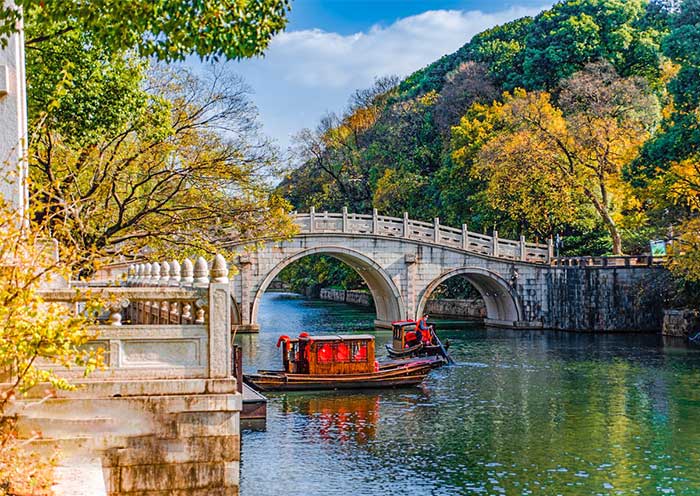
Location: Huqiu District, Suzhou (approx. 5km from the city center).
Entry Fee: CNY 70 (High Season: Apr–Oct) | CNY 60 (Low Season: Nov–Mar).
Duration: 2 – 3 Hours.
Best Time: Early morning for misty garden views or Autumn for the golden ginkgo trees.
Tiger Hill (虎丘), a historic site with a legacy of more than 2,500 years, holds the esteemed title of being the "top scenic spot in the Wu region".
A visit to Suzhou without exploring Tiger Hill is often regarded as a regrettable omission, as expressed by the poet Su Dongpo in Song Dynasty.
The inscription of the five characters "Number One Mountain in Wu Region" on the main gate was penned by the renowned Chinese architect I.M. Pei, the same mastermind behind the design of the Suzhou Museum.
During the Spring and Autumn period, King Fuchai of Wu chose this location as the burial site for his father, King Helü. Just 3 days after the burial, a white tiger was observed perched on the hill, lending the name "Tiger Hill" to the site.
What to See in Tiger Hill Scenic Area
| Experience | Highlights |
|---|---|
| Tiger Hill Pagoda | Known as the "Leaning Tower of China"; a 1,000-year-old marvel tilting at 3.59 degrees. |
| The Sword Pond | The mysterious burial site of King Helü, rumored to hide 3,000 legendary swords beneath the water. |
| Wanshu Terrace | A vast, flat rock area perfect for viewing the hill's unique "garden-on-a-mountain" layout. |
| Bonsai Garden | A world-class collection of hundreds of Suzhou-style bonsai (Penjing) trees. |
| Bamboo Grove | A tranquil, shaded path on the western side, ideal for escaping the crowds. |
Rather than considering Tiger Hill solely as a single mountain, it can be better described as a hill adorned with a picturesque garden. Among its renowned attractions, the Tiger Hill Pagoda and the Sword Pond stand out.
On the eastern and western sides of Tiger Hill, visitors can explore numerous other scenic spots, including the Hanzhan Spring, the Nodding Stone, the Wansu Terrace, the Crane-Rearing Pavilion, the Two Immortals Pavilion, the Zhishuang Pavilion, and the Bamboo Grove.
- Avoid the Midday Crowd: Arrive at 8:00 AM to photograph the pagoda without the tour groups.
- The North Gate Path: For a quieter experience, walk through the Bamboo Grove on the hill's western side.
- Combined Ticket: Tiger Hill is a great 2-hour stop before heading to the nearby Shantang Street for a sunset boat ride.
4. Walk Shantang Street: Suzhou’s Most Famous Ancient Alleys


Location: Gusu District (Metro Line 2, Shantang Jie Station).
Entry: Free to walk; boat rides require a ticket.
Travel Time: 1.5 to 2.5 hours
Best Time: 6:00 PM (Dusk) to see the lanterns turn on.
Referred to as "Suzhou's No.1 Ancient Street", Shantang Street (山塘街) is a renowned historical destination located in Suzhou, boasting a history of over 1100 years.
It is celebrated for its traditional architecture, ancient buildings, and picturesque canal views. Stretching approximately 3.5 kilometers alongside the Shantang Canal, a part of the ancient Beijing-Hangzhou Grand Canal, the street offers a delightful experience for visitors.
Exploring the various shops, tea houses, restaurants, and traditional Chinese architecture, visitors can immerse themselves in the rich cultural heritage of Suzhou. Shantang Street has become a popular tourist destination cherished for its charm and historical significance.
Located about 3.7km away from Shantang Street, Pingjiang Road (平江路) presents a captivating array of ancient Ming and Qing structures, including water lanes, temples, and guildhalls. Bearing striking resemblances to Shantang Street, it offers an equally enticing option for exploration.
Best Experience at Shantang Street, Suzhou
| Experience | Highlights |
|---|---|
| Ancient Architecture | Traditional white-walled buildings & guildhalls. |
| Canal Boat Ride | The boat ride typically lasts around 40 minutes and can be boarded at the Ancient Opera Stage Wharf (古戏台码头). |
| Local Cuisine | Pan-fried buns & Squirrel-shaped Mandarin Fish. |
| Souvenir Shopping | Suzhou silk, embroidery, and Biluochun tea. |
| Nighttime Vibe | Iconic red lanterns & canal reflections. |
5. Day Trip to Zhouzhuang: China’s Number One Water Town


Location: Kunshan, Suzhou (Strategic hub between Shanghai and Hangzhou).
Daytime Ticket (CNY 100): Valid from 7:30 AM to 4:00 PM.
Night Ticket (CNY 80): Valid for entry after 4:00 PM.
Duration: 4 to 6 Hours
Best Time: Early morning or after 6:00 PM to avoid heavy tour groups.
Zhouzhuang Water Town (周庄), renowned as the number one water town in the Jiangnan region, holds prestigious accolades such as its inclusion in the UNESCO World Cultural Heritage tentative list and selection as one of CNN's "Top Ten Most Beautiful Towns in the World".
Situated approximately 38 km southeast of Suzhou and around 70 km from Shanghai, it occupies a strategic location between the cities of Shanghai, Suzhou, and Hangzhou.
The town's captivating charm stems from its unique setting, with water encompassing it on all sides. Its streets gracefully follow the meandering waterways, forming a vibrant hub of markets and commerce. Among the prominent attractions are Fu'an Bridge, Twin Bridges, and Shen Hall. These ancient stone bridges, dating back to the Yuan, Ming, and Qing dynasties, number a remarkable 14 in total. Adorning the town, they bear witness to its rich historical heritage.
Over 800 locals reside harmoniously along the intersecting waterways, and more than 60% of the residential buildings proudly retain their original architectural style from the Ming and Qing periods.
Notably, Zhouzhuang Ancient Town boasts a figure of great significance - Shen Wansan (沈万三). As a prominent businessman during the late Yuan and early Ming dynasties, Shen Wansan's family continued his legacy, engaging in agricultural pursuits, expanding their estates, and amassing immense wealth. He emerged as the wealthiest individual in the Jiangnan region during that era.
Main attractions within Zhouzhuang Ancient Town include
| Experience | Highlights |
|---|---|
| Shen Hall (沈厅) | 100+ rooms built by descendants of the Richest Man in Jiangnan–Shen Wansan (沈万三) in Qing Dynasty. |
| Zhang Hall (张厅) | Rare Ming Dynasty residence with a private backyard garden. Over 60 rooms. |
| Stone Bridges | Twin Bridges (Shuang Qiao) and Fu'an Bridge are iconic photo spots. |
| Canal Exploration | Wandering the water lanes where 60% of buildings are original. |
| Zhouzhuang Museum | Exhibits of local black pottery and ancient farming tools. |
6. Digital Detox at Tongli Water Town, the Venice of the East


Location: Wujiang District, Suzhou. Accessible via Metro Line 4 (Tongli Station).
Entry Fee: Typically CNY 100 for a combo ticket (valid for 2 days).
Duration: 3–5 Hours (Half-day)
Best Time: Early morning for local life or evening for illuminated bridges.
Tongli (同里), often referred to as the Venice of the East, is a picturesque small town situated in Wujiang District, Suzhou City, Jiangsu Province. Located just 27 kilometers from downtown Suzhou and a mere 87 kilometers from Shanghai's iconic Bund, Tongli is easily accessible and attracts visitors from near and far.
With its origins dating back to the Song Dynasty, Tongli Ancient Town is renowned for its splendid array of gardens, temples, mansions, and historical residences hailing from the Ming and Qing Dynasties.
The town is uniquely divided into seven small islands by 15 meandering rivers, forming a charming shape reminiscent of the Chinese character "川" (chuan). These islands are beautifully interconnected by 49 ancient bridges, lending Tongli its distinctive character of "small bridges, flowing water, and residential houses."
Attractions and Activities in Tongli
| Experience | Highlights |
|---|---|
| Tuisi Garden (退思园) | A UNESCO World Heritage site famous for its unique east-west water-focused layout. |
| Three Bridges (三桥) | Walking across Taiping, Jili, and Changqing bridges is a local ritual for good luck. |
| Luoxingzhou Island (落星洲) | A "falling star" shaped island in Tongli Lake accessible only by boat. |
| Three Halls (三堂) | Explore the expansive courtyards of Chongben, Jiayin, and Gengle Halls. |
| Canal Walk | Wander the 15 meandering rivers and narrow stone-paved alleys. |
- Choose Zhouzhuang: If you want the "No. 1" experience with the most commercial energy and iconic photo spots like the Twin Bridges.
- Choose Tongli: If you prefer a more tranquil vibe and easier access via the Suzhou Metro.
7. Cruise on Beijing-Hangzhou Grand Canal to See Old Suzhou


Where to Board: Xinshiqiao Dock (新市桥码头).
Where to Offboard: Returns to Xinshiqiao Dock (Circular route via Shantang Street).
Duration: 1 Hour.
Estimated Cost: CNY 120 – 150 per person (varies by boat type and time of day).
Best Time: Night Cruise (after 6:30 PM) to see the illuminated city gates and glowing lanterns.
The Beijing-Hangzhou Grand Canal (京杭大运河), also known as the Grand Canal of China, is the longest and oldest artificial waterway in the world. It is a UNESCO World Heritage sites and spans approximately 1,794 kilometers (1,115 miles) in length.
The canal stretches from Beijing in the north to Hangzhou in the south, passing through several provinces and major cities such as Tianjin, Hebei, Shandong, Jiangsu, and Zhejiang.
The construction of the Grand Canal began as early as the 5th century BC, but its most significant expansion and improvements were made during the Sui dynasty (581-618 AD) and completed in the early Tang dynasty (618-907 AD).
The canal served as a crucial transportation artery, connecting the Yellow River and the Yangtze River systems, and played a vital role in facilitating economic and cultural exchange between northern and southern China.
Cruise along Suzhou Grand Canal
To fully appreciate the charm of old Suzhou, it is a good idea to cruise on Jinghang Grand Canal in Suzhou section. One of the most cherished experiences is the cruise from Xinshiqiao Dock to Shantang Street, which encapsulates the essence of the entire canal.
This scenic journey allows visitors to marvel not only at the ancient city gate towers of Suzhou but also the vibrant atmosphere of historic Shantang Street and the beautifully weathered old buildings lining the banks.
Day Cruise or Night Cruise
A day tour offers a unique opportunity to bask in the enchanting scenery, characterized by a delightful blend of antiquity and charm.
However, it is the nighttime cruise that truly leaves an indelible impression. As the sun sets, the canal comes alive with colorful lights illuminating the painted boats, accompanied by melodic songs and the gentle lapping of the water against the old structures adorning the banks. The romantic ambiance of Suzhou is simply irresistible.
- Recommended Visiting Time: Approximately 1 hour is needed to complete the journey.
- Route: The route encompasses Xinshiqiao Dock, Xu Gate, Jin Gate, Wanren Dock, Chang Gate, Shantang Street, before returning to the starting point.
8. Watch a Traditional Kunqu Opera & Pingtan Performance


Best Value: The Master of the Nets Garden offers 8 different short performances in one ticket.
Duration: Most garden performances last 60 – 90 minutes.
Booking: Popular shows like Six Records of a Floating Life require booking 3–5 days in advance during peak season.
Suzhou holds a significant position today as a city that preserves the rich heritage of "Guo Yue" or national music. It proudly encompasses renowned cultural treasures such as Kunqu opera, an iconic form of traditional Chinese drama, and the folk art of Pingtan storytelling.
These, along with the captivating Suzhou gardens, have collectively become known as the "Three Cultural Gems" of Suzhou, symbolizing its historical and cultural importance.
In ancient times, prosperous households would often include a theater stage within their gardens. It was on these stages that Kunqu opera performers passionately showcased their talents, creating a mesmerizing melody that carried across the water.
Present-day visitors to Suzhou have the unique opportunity to immerse themselves in the simultaneous beauty of Kunqu opera and the exquisite Suzhou gardens.
As they leisurely explore the pavilions and towers, they find themselves enveloped in a tranquil ambiance, embracing the stillness of time and savoring the ever-changing scenery.
The gardens themselves serve as the backdrop for captivating stories such as "Xiyuanji" (The Story of the Western Garden), "Mudan Ting" (The Peony Pavilion), and "Wanghuting" (The Lake Pavilion). As the enchanting melodies of "Mudan Ting" gradually unfold under the moonlit night, observers on the opposite shore feel transported into a dreamlike realm.
The soft and melodious vocals, accompanied by graceful lyrics, flow like a meandering stream, captivating and entrancing all who experience them.
Best Places to Enjoy Kunqu Opera and Pingtan in Suzhou
| Venue | Experience | Highlights |
|---|---|---|
| Humble Administrator’s Garden (拙政园) | Inquiry into Elegance | 500 years of history; night tour focused on garden art and heritage. |
| Master of the Nets Garden (网师园) | Night Garden Tour | Sensory "Night Blossom" show; rhythmic poetry and multi-act opera. |
| Lion Grove Garden (狮子林) | Ancient Hanfu Night | Immersive time-travel theme; visitors can wear Hanfu attire. |
| Canglang Pavilion (沧浪亭) | Six Records of a Floating Life (浮生六记) | Highly popular immersive "walking theater" based on the famous memoir. |
| Kunqu Opera Museum (昆曲博物馆) | Historical Archive | Best for deep-diving into opera history, costumes, and artifacts. |
9. Learn the History of Chinese Silk at Suzhou Silk Factory
Location: 94 Nanmen Road, Gusu District (near Panmen Scenic Area).
Entry Fee: Free (Guided tours are often included).
Duration: 1 – 1.5 Hours.
Best Time: Morning (9:00 AM – 11:00 AM) to see the machines in full operation.
Suzhou, known as the "City of Silk", has gained renown for its mesmerizing beauty and status as a hub for the finest silk production. During the Tang and Song dynasties, Suzhou held the prestigious position of being the nation's silk capital.
Skilled weavers in Suzhou were responsible for creating many of the royal-grade silk fabrics during the Ming and Qing dynasties.
Today, Suzhou stands as one of the cities with the most extensive and diverse collections of historical silk production relics, silk samples, and records of silk craftsmanship.
With a history spanning over two thousand years, Suzhou embroidery proudly stands as one of the "Four Famous Embroideries of China." Located near the Panmen Scenic Area, the Suzhou No.1 Silk Factory plays a crucial role in preserving and showcasing the rich silk culture.
Best Experiences at Suzhou Silk Factory
| Experience | Highlights |
|---|---|
| Silk Reeling Workshop | Observe the traditional and industrial machines unwinding silkworm cocoons. |
| Embroidery Gallery | View Suzhou Embroidery (one of China's "Four Famous Embroideries"). |
| Silk Quilt Making | Watch "hand-pulling" demonstrations where layers of silk are stretched into duvets. |
| Fashion Shows | Traditional and modern Qipao runway shows highlighting 5,000 years of silk history. |
| Mulberry Garden | Learn about silkworm rearing and the life cycle of the mulberry moth. |
Since the factory is located right next to the Panmen Scenic Area, it is highly recommended to combine these two visits.
You can spend the morning learning about silk and the afternoon exploring the ancient city walls and the Ruiguang Pagoda (瑞光塔).
10. Explore the “Three Sights of Panmen” Scenic Area
Location: Panmen Scenic Area, southwest corner of Suzhou's ancient city wall.
Entry Fee: CNY 40 (Standard admission).
Duration: 1 – 1.5 Hours.
Best Time: Late afternoon to catch the sunset over the Grand Canal from the top of the city walls.
"Facing the might of the Great Wall in the north, and witnessing the beauty of Panmen in the south. Panmen, one of the eight gates of the ancient Wu capital, was the city founded by the Wu king under the order of Wu Zixu.
With a history of over 2500 years, Panmen features a central courtyard with the traditional classical garden layout of “one pond and three hills”, encompassing exquisite ancient structures, the charm of a water town, pavilions and terraces nestled among mountains and ponds, and the interplay of light and shadows on the lake and hills.
The "Three Sights of Panmen"
During a visit to Panmen, there are 3 prominent attractions, collectively known as the "Three Sights of Panmen":
| Landmark | Highlights |
|---|---|
| Water and Land City Gate (水陆城门) | The only well-preserved dual-access gate in Suzhou; includes two water barriers and three land gates. |
| Wumen Bridge (吴门桥) | Suzhou's tallest ancient single-arch stone bridge, serving as a gateway to the Grand Canal. |
| Ruiguang Pagoda (瑞光塔) | A seven-story, eight-sided brick and wood tower dating back to the Northern Song Dynasty (1004 AD). |
This site is conveniently located near the Suzhou No.1 Silk Factory, making them perfect to pair together for a half-day itinerary.
How to Plan Suzhou Tours with Top Attractions & Things to Do?

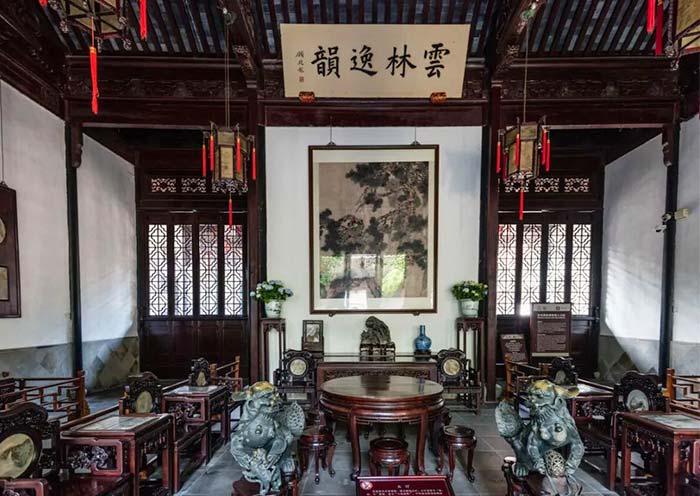
It is recommended to allocate 1-2 days in Suzhou, allowing yourself ample time to unravel the enchanting treasures that this city beholds.
Suzhou Day Trip from Shanghai by High Speed Train
Take a Suzhou day trip from Shanghai by high-speed train. Immerse yourself in the captivating wonders of the Humble Administrator's Garden, Suzhou Museum, Tiger Hill, stroll along the enchanting Shantang Street, and indulge in a scenic cruise along the Suzhou Grand Canal.

Suzhou Day Trip from Shanghai by High Speed Train
Shanghai - Suzhou - Shanghai
 1 Day
1 Day 3 Places
Suzhou Day Trip with Classical Gardens & Water Towns
Experience the charm of Suzhou on a captivating day trip that combines visits to the exquisite Humble Administrator's Garden and Suzhou Museum with a delightful exploration of either the picturesque Zhouzhuang Water Town or the enchanting Tongli Water Town.
1 Day Suzhou Garden & Tongli Water Town Tour from Shanghai
Shanghai - Suzhou - Tongli Water Town - Shanghai
2 Days In-depth Suzhou Tour with Classical Gardens & Water Towns
Indulge in an immersive journey through the heart of Suzhou's downtown, where you can embark on an enchanting exploration of iconic attractions such as the Humble Administrator's Garden, Suzhou Museum, Lion Grove Garden, Tiger Hill, and Shantang Street.
Delight in a night cultural experience at the mesmerizing Masters of the Nets’ Garden.
Afterward, venture into the neighboring realm of water towns, be it the picturesque splendor of Zhouzhuang or the alluring charm of Tongli, to unravel another day of captivating discoveries.

Extend Shanghai Suzhou Tours to Other Destinations
"Paradise in Heaven; Suzhou & Hangzhou on Earth."
It is a good idea to cover romantic Hangzhou in your trip or extend to Huangshan Yellow Mountain for a nature escape and Hui-style culture.
You can also add destinations like Shanghai, Beijing, Xi'an, the Yangtze River, Tibet, the Silk Road, Guilin, Chengdu, Zhangjiajie, and more! Each tour can be fully customized to match your unique interests and preferences, all at the best possible local prices.
Explore the Yangtze River Delta with Asia Odyssey Travel
Embark on a captivating journey through the heart of China's economic and cultural powerhouse with Asia Odyssey Travel.
The Yangtze River Delta offers a compelling blend of rapid modernization and rich cultural heritage, and Asia Odyssey Travel is your perfect partner to tailor a tour that reflects your unique travel interests.
Contact us today to start planning your adventure, and let us show you the dynamic beauty and enduring traditions of this extraordinary region.





 Data in submission...